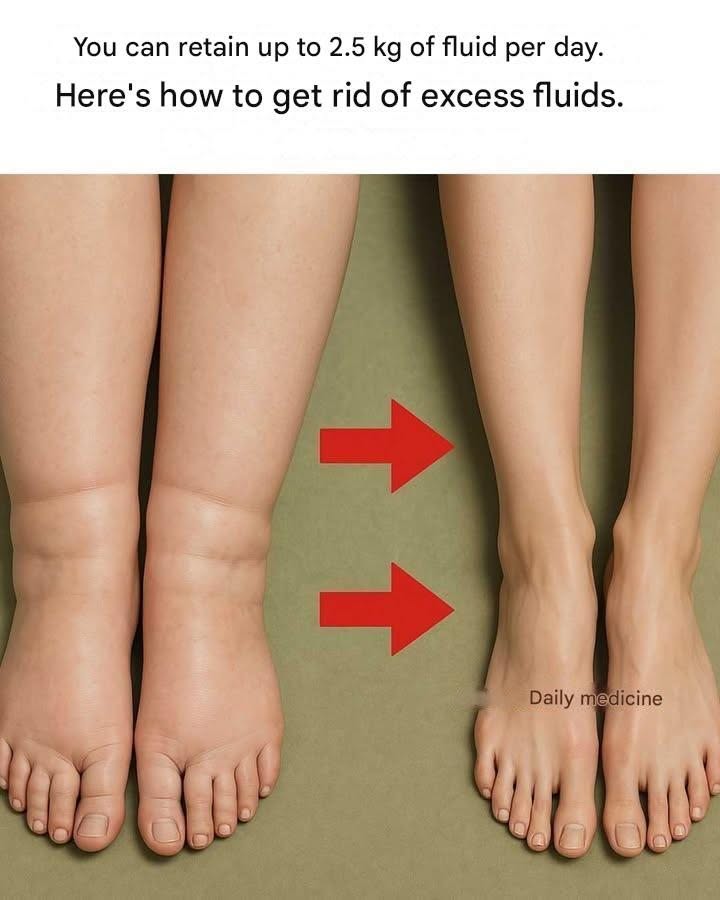
Sudden weight gain can sometimes be caused by water retention rather than body fat. Learn why fluid builds up, what can safely help reduce mild swelling, and when water retention needs medical attention.
Have you ever stepped on the scale and discovered that your weight is suddenly 1 or 2 kilograms higher than it was yesterday?
It can be alarming, especially if you’re trying to lose weight. But a rapid change on the scale does not necessarily mean you’ve gained that much body fat.
One possible explanation is fluid retention, also called edema when excess fluid collects in body tissues.
Your body constantly moves water between the bloodstream, tissues and organs. The kidneys, hormones, blood vessels and lymphatic system all help maintain this delicate balance. When that balance temporarily shifts, your body may hold onto more water than usual.
A salty meal, hormonal changes, prolonged sitting, hot weather, certain medications and other factors can all contribute to temporary swelling or weight changes. However, significant or persistent fluid retention can also be a sign of an underlying medical condition.
Can You Really Gain 2.5 kg of Fluid?
It is possible for body weight to change rapidly because of water and other contents in the body, but the exact amount varies considerably from person to person.
A sudden increase on the scale should therefore not automatically be interpreted as 2.5 kg of retained water.
For example, after eating a salty or carbohydrate-heavy meal, the body may temporarily hold more water. Hormonal fluctuations can also affect how much water the body retains.
This is one reason why comparing your weight from one day to the next can sometimes be misleading.
The more important question is:
Are you simply experiencing a temporary fluctuation, or are you developing true edema?
What Is Water Retention?
Edema occurs when excess fluid collects in the body’s tissues. It is particularly common in the feet, ankles and legs, although swelling can occur elsewhere or throughout the body.
You may notice:
- Puffy ankles or feet
- Rings or shoes feeling tighter
- Swollen fingers
- A feeling of heaviness in the legs
- Skin that looks stretched or shiny
- A temporary increase in body weight
- A dent that remains briefly after pressing swollen skin, in cases of pitting edema
Mild swelling can occur after standing or sitting for long periods, during hot weather, or after consuming a lot of sodium.
1. Cut Back on Excess Sodium
One of the simplest things you can do when you’re dealing with mild water retention is to reduce excessive sodium.
Salt contains sodium, and consuming large amounts can encourage the body to retain fluid. Processed foods, packaged soups, sauces, chips, cured meats and many restaurant foods can contain substantial amounts of sodium.
Instead of trying to eliminate salt completely, focus on reducing foods that are particularly high in sodium.
Choose more:
- Fresh fruits
- Vegetables
- Plain yogurt
- Beans and lentils
- Unsalted nuts
- Fresh meats and fish
- Home-cooked meals
And check food labels for sodium content.
2. Keep Moving
Sitting or standing in one position for many hours can contribute to swelling, particularly in the lower legs.
Gentle movement helps your leg muscles pump blood and fluid back toward the heart.
Try:
- Walking regularly
- Moving your ankles while sitting
- Flexing and extending your feet
- Taking breaks during long journeys
- Avoiding sitting continuously for several hours
For people with mild swelling, movement can be particularly helpful.
3. Elevate Swollen Legs
If your ankles or feet are swollen, lying down and raising your legs can help fluid move away from the lower limbs.
You can place your legs on pillows while resting, ideally raising them above the level of your heart when comfortable.
However, if elevating your legs causes shortness of breath, don’t continue doing it at home—seek medical advice instead.
4. Don’t Try to Dehydrate Yourself
This is one of the biggest mistakes people make when they want to lose “water weight.”
Drinking drastically less water does not provide a safe shortcut for eliminating fluid retention.
Your body needs water to function normally, and fluid balance is tightly regulated by the kidneys and hormones. Excessive fluid restriction can cause dehydration and electrolyte problems.
Unless your doctor has specifically instructed you to restrict fluids because of a medical condition, don’t intentionally dehydrate yourself to make the scale drop.
5. Be Careful With “Natural Water Pills”
You may see teas, herbs and supplements advertised as natural diuretics that supposedly flush kilograms of water from the body.
Be cautious.
Increasing urination isn’t necessarily the same as correcting the reason your body is retaining fluid. Excessive use of diuretics or products marketed for rapid water loss can also disturb electrolytes and cause dehydration.
Prescription diuretics, commonly called water pills, are sometimes used to treat significant edema—but they should be used under medical supervision because the appropriate treatment depends on the underlying cause.
6. Look at Your Recent Meals
If your weight suddenly increases after a restaurant meal, holiday meal or several processed foods, sodium may be one contributor.
Carbohydrate intake can also affect short-term scale weight because the body stores carbohydrate as glycogen, which is associated with water.
That doesn’t mean carbohydrates are “bad” or that you need to eliminate them.
Instead, look at your overall eating pattern over several days rather than judging your progress from one morning’s weigh-in.
7. Avoid Staying in One Position for Too Long
Long flights, road trips, desk work and other periods of prolonged sitting can contribute to swelling in the feet and ankles.
During long periods of sitting, get up periodically when possible and walk around.
If you cannot stand, move your feet and ankles regularly.
People who frequently develop swelling during travel should discuss appropriate preventive measures with a healthcare professional.
8. Compression Garments May Help Some People
Compression stockings can help improve circulation in the legs and reduce or prevent certain types of swelling.
However, they aren’t appropriate for everyone.
If you have significant swelling, circulation problems, unexplained leg pain, or other medical conditions, ask a healthcare professional before using compression garments. Mayo Clinic notes that compression garments can be useful for certain types of edema.
9. Check Your Medications
Some medications can contribute to swelling.
Depending on the medication and individual circumstances, these can include certain blood-pressure medicines, corticosteroids and other drugs.
But never stop a prescribed medication simply because you think it is causing water retention.
Instead, speak with your doctor or pharmacist. The medication may be changed, the dose adjusted, or another explanation for the swelling may need to be investigated.
When Water Retention May Be a Warning Sign
Not all swelling is harmless.
Fluid accumulation can occur with conditions involving the heart, kidneys or liver. It can also occur with thyroid disease, pregnancy, venous problems, certain medications and other conditions.
You should have unexplained or persistent swelling evaluated by a healthcare professional, particularly if it is getting worse.
Seek urgent medical attention if swelling occurs with:
- Shortness of breath
- Chest pain or pressure
- Difficulty breathing when lying down
- Severe or rapidly worsening swelling
- A new swollen, red or warm leg
- Sudden swelling of only one leg
- Fainting or severe weakness
Shortness of breath or chest pain accompanying swelling can indicate a potentially serious heart or lung problem and should not be treated as ordinary “water weight.”
What About Rapid Weight Loss From Water?
If your weight falls quickly after reducing sodium or after a period of temporary water retention, that doesn’t necessarily mean you’ve burned body fat.
The scale may simply be returning toward your normal level.
That’s why sustainable fat loss should be judged by trends over weeks rather than dramatic changes from one day to the next.
A healthy goal is not to continually manipulate your body’s water levels. The goal is to maintain a normal fluid balance while addressing whatever is causing abnormal retention.
A Simple Daily Approach
For mild, temporary puffiness, a sensible approach is:
- Eat mostly fresh, minimally processed foods.
- Reduce excessive sodium.
- Drink fluids normally rather than deliberately dehydrating yourself.
- Take regular movement breaks.
- Elevate swollen legs when appropriate.
- Maintain regular physical activity.
- Avoid unapproved diuretics and “detox” products.
- Monitor whether the swelling improves.
- Speak with a healthcare professional if swelling persists or repeatedly returns.
The Bottom Line
A sudden increase on the scale can sometimes be caused by water rather than fat, but there is no universal safe method for flushing out 2.5 kg of fluid in a day.
Mild temporary water retention may improve when you reduce excessive sodium, move regularly and give your body time to restore its normal fluid balance.
But significant or persistent edema is different. It can sometimes be associated with heart, kidney, liver, thyroid, circulation or medication-related problems and deserves proper evaluation.
Most importantly, don’t try to force rapid water loss through dehydration, excessive exercise, laxatives or unprescribed diuretics. If your body is retaining a substantial amount of fluid, finding the reason is more important than simply making the scale drop.